

 Cultural relationships
Negotiating family traditions and boundaries across cultures
By Bonding Beacon · Published November 11, 2026
← Back to the resource libraryCouples and families can handle different traditions by deciding, one practice at a time, whether to keep it, adapt it, share it, alternate it, or decline it. The decision starts with the people who share the household, before it reaches parents, in-laws, or the wider family. That order means you have words ready when a relative asks.
The method works because a tradition has two layers. The meaning is what it stands for, such as gratitude, faith, remembrance, hospitality, or belonging. The form is the date, place, language, food, clothing, guest list, or role. Meaning can stay while the form changes, and nobody has to hold the same belief to agree on a plan.
Below are the pressure points that come up most often, a seven-step way to decide, scripts in English and Spanish, and a holiday planning timeline. For the wider picture of how culture shapes close relationships, see cultural relationships.
Separate what a tradition means from how it is practiced
Start by naming the practice as a specific behavior: a Sunday meal at a grandparent's house, a three-day wedding ritual, a role as the one who translates for the family, or a monthly transfer of money to relatives. Then ask what it stands for. One person may hear "come home for the holiday" as love. Another may hear it as a test of loyalty. The same visible practice can carry different meanings for different people, so ask before you assume.
A useful opening sounds like this: "I want to understand what this tradition means to you before we decide how we will participate." It invites a real answer and leaves room for the other person to explain, which is the habit the American Psychological Association's multicultural guidelines describe as respecting how people define themselves and avoiding assumptions based on a category.
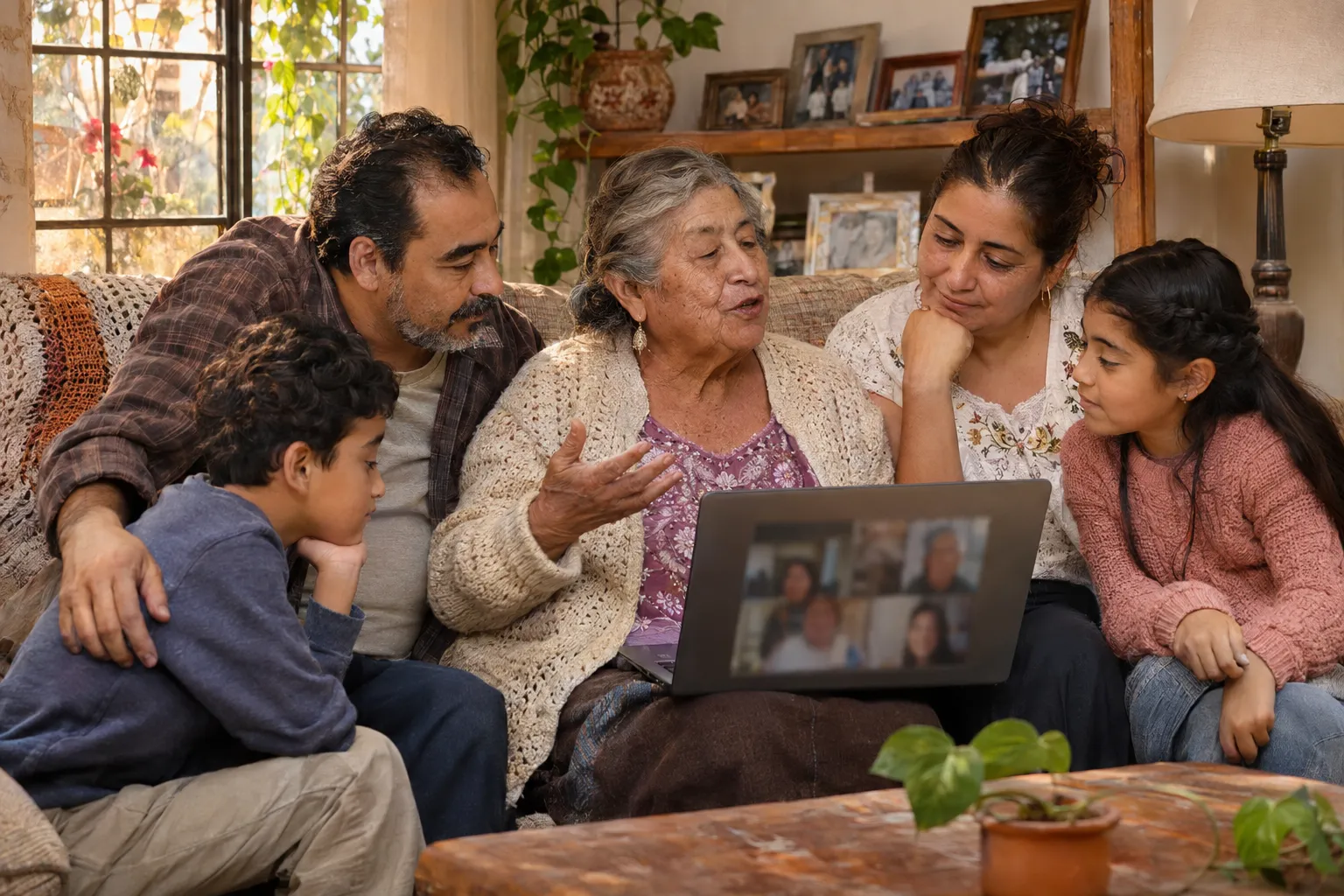
A tradition can stay meaningful when its timing, location, language, food, clothing, guest list, or family role changes. Families that move, marry, or raise children in a new place often keep the heart of a practice and adjust the rest. U.S. Children's Bureau guidance on keeping cultural connections points to language, food, holidays, clothing, and community as ways cultural identity stays alive, while keeping safety and what the household can manage in view.
This is also the answer to why many families care about holding on to traditions at all: they carry identity, belonging, and shared stories. Respect for another culture starts the same way, by asking what a practice means to the person in front of you, learning the names and terms they prefer, and not treating any one person as the spokesperson for a whole community.
Where family expectations tend to meet your household
Expectations usually arrive attached to a specific moment. Knowing the common ones helps you spot which practice you are actually discussing.
Holidays and travel. Families may expect attendance, overnight stays, hosting, particular dates, or travel across borders. Talk through cost, time off, accessibility, lodging, and children's routines, and ask whether attendance is required, invited, or optional.
Religious practice. Worship, prayer, fasting, clothing, dietary rules, religious education, and naming or marriage rituals can all be part of the picture. Couples in the United States differ in religious identity and in how often they discuss it. Pew Research Center's study of religious intermarriage, based on married adults surveyed in 2023 and 2024, shows how common those differences are.
Language at home. Decide which language fits daily routines, affection, family stories, religious life, school, and calls with extended family. The National Academies reports that two-language exposure does not confuse young children and that a strong home language can support family relationships and later language learning.
Food. Ingredients, fasting, allergies, disability-related needs, alcohol, and who does the preparation all matter. Eating a particular dish is one way to show respect, and so is joining the table in a form that works for your body and beliefs.
Family roles. Expectations can involve who hosts, serves, earns, leads ceremonies, speaks for the household, or makes decisions. Value what each person contributes without assigning a task automatically by gender, age, birth order, marital status, or sexuality. "I will not take on that family role. I can help with transportation instead" is one way to offer what you can do.
Elder care and money sent to relatives. Spell out who provides personal care, transportation, translation, appointments, housing, and emergency help, and whether financial support is voluntary, shared, recurring, or tied to a purpose. Include your own housing, food, debt, health, and savings in the count. A U.S. study of Chinese immigrant adults in the Chicago area, with interviews held between 2012 and 2014, found that norms and values, relationships, money, health, and parenting were separate areas of conflict with older parents. It describes one community, so read it as an example of how care and money tangle when duties are assumed instead of agreed.
Privacy. Decide what relatives may know, photograph, post, ask about, translate, or pass along. You can value family closeness and still keep medical, financial, religious, relationship, immigration, or parenting details private.
Different paces of change are ordinary
People adapt to a new setting at different speeds, and that is a difference in pace and context, not a ranking. Acculturation describes how people change through contact with another cultural environment. It does not point to one correct destination, and keeping a heritage language, religion, food, or practice is not a failure to adapt.
Partners can differ because they grew up in different countries, regions, religions, classes, or family structures. Parents and children meet different schools, workplaces, peers, and media. A national U.S. study of immigrant families, using survey data collected in the mid-1990s, found that adolescents generally adapted to U.S. society faster than their immigrant parents. The gap was associated with lower family cohesion, fewer shared dinners, and more arguments between parents and teens. That is an association from one dataset about parents and teenagers, not proof that the gap causes conflict, and it does not describe every family.
Four questions keep the talk about pace and not about who is "more cultural":
- Which parts of this practice feel essential to you?
- What changed when you moved, married, became a parent, or joined a new household?
- Which parts are values, and which parts are one way of expressing those values?
- What do you want to continue, and what do you want to change?
Couples from different racial or ethnic backgrounds meet many of the same questions, and the guide to interracial relationships covers that part of the picture.
Seven steps to decide one practice
Take one practice at a time and move through these steps together, in private, before anyone speaks to relatives.
- Name the practice. Describe the specific behavior, date, role, cost, language, ritual, or privacy expectation.
- Name the meaning. Ask what it represents: belonging, faith, gratitude, remembrance, respect, protection, hospitality, identity, or family continuity.
- Check capacity and consent. Consider time, money, health, disability access, travel documents, childcare, privacy, and willingness.
- Choose an option. Keep, adapt, share, alternate, or decline.
- Decide what is private. Agree on what relatives may be told and who will say it.
- Set a practical limit. Settle dates, transportation, spending, guest lists, visit length, language, photos, and an exit plan.
- Revisit by agreement. Plans can change when children grow, money shifts, someone becomes disabled, a relative needs care, or a religious commitment changes.
The five options in step 4 are easy to mix up, so here is how each sounds in practice. To keep a practice, say, "We want to continue this tradition in the same way this year." To adapt, say, "We want to keep the family meal, but we will host it earlier and include food that everyone can eat." To share, say, "We will include both prayers, and each person may participate in the way that fits their beliefs." To alternate, say, "We will spend this holiday with your family this year and with mine next year." To decline, say, "We will not take part in that ceremony. We still want to stay connected in another way."
These can be combined. A household might keep the food, adapt the date, share the language, alternate the travel, and decline one role. The plan stays yours to change, and for a longer prep conversation the guide to planning a family conversation lays out timing and format.

Words to use with relatives, in English and Spanish
Use the language in which each person can say the decision accurately. Ask which names, honorifics, and level of formality they prefer, and do not make a bilingual child the only interpreter for a high-stakes conversation. When you are ready to present a joint decision, one version works for most practices: "We respect what this tradition means to our families. We have decided together to [keep, adapt, share, alternate, or decline] it by [specific plan]. We are not asking everyone to make the same choice. We are asking you to respect ours."
Direct English keeps the message short. "Thank you for asking. We are not sharing that information." "We will visit from 2 to 5 p.m., but we will not stay overnight." "I will not lead the ceremony. I can attend as a guest." Warmer, informal English works when the relationship is close: "We care about being together, but we are going to do the holiday differently this year," or "I'm sitting this one out. I hope we can still share a meal another day."
In respectful Spanish, the same ideas come across like this:
- "Gracias por preguntar. Por ahora preferimos mantener ese tema en privado."
- "Agradecemos la invitación, pero este año no vamos a participar en la ceremonia."
- "Los queremos y queremos seguir en contacto. Esta decisión no cambia eso."
- "Vamos a celebrar de una manera que funcione para nuestra casa."
- "Podemos visitar el sábado de 2 a 5, pero no nos vamos a quedar a dormir."
With elders or in formal settings, a more formal register can help: "Agradecemos que hayan pensado en nosotros. Hemos decidido no asumir ese papel." "Respetamos el significado de esta tradición, pero participaremos de otra manera." "Les pedimos que respeten nuestra decisión y que no compartan esta información con otras personas."
If a relative keeps asking, repeat the same sentence instead of adding private details. In Spanish, "Entiendo que quieras saber más. No vamos a hablar de eso." In English, "I know you'd like to hear more. We are not going to talk about that." Affirming the relationship does not require promising access, agreement, forgiveness, disclosure, or continued contact.
These scripts rely on a few distinctions. A request asks whether someone is willing, a boundary states what you will do to protect a limit, a capacity limit describes what you can manage right now, and a restriction on another person tries to control what they do. Only the first three belong in this conversation. The guide to boundaries and requests goes deeper into follow-through and revising a limit.
Children, language, religion, and names
Couples can decide what to introduce, what to require, what to make optional, and what to leave open for a child's later choice. It helps to sort the plan into five parts: identity (names, family stories, ancestry, language), practice (meals, holidays, clothing, music, prayer, ceremonies, visits), values (honesty, care, responsibility, hospitality), choice (what a child may question, decline, or decide later), and privacy (who may hear about a child's beliefs, health, school, or relationships).
For language, adults can speak the language they are most comfortable and capable in, while giving children regular chances to hear and use both. Many families use English for school matters and a heritage language for family stories, and that division is a plan you can write as a household sentence: "We will use both languages at home."
For religion, talk through whether a child will attend services, learn about more than one tradition, take part in ceremonies, receive religious education, or have space to decide later. Pew's survey of U.S. parents and teens found that parents strongly influence religious practice while teens may hold different beliefs and often report little conflict about it. A 2025 Pew survey found parents use many ways of passing on faith, including services, conversations, prayer, stories, music, and arts.
For names, consider pronunciation, family history, surnames, religious meaning, and how a child may feel about a name as they grow. Rules about legal names, religious ceremonies, and documents vary by state and by faith community, so confirm those with the official office or the community's leaders.
A child should not carry adult disagreements, translate pressured messages, keep secrets that affect their safety, or choose between adults. Cultural or religious participation should be age-appropriate and free from punishment for asking questions.
Family structures, access needs, ages, and incomes
No single household shape is the default. Your plan may involve biological, adoptive, foster, step, and chosen family, blended households across two homes, multigenerational homes, LGBTQ+ parents or grandparents, and people with different incomes, time, mobility, or legal authority.
For chosen family, ask whom each person counts as family and invite people by the relationship, not only biology or surname. The American Psychological Association's guidance recognizes chosen families and advises against pressuring a person to share an identity when sharing could bring rejection or harm. In a blended family, name which adults share responsibility for a child and which decisions need agreement across homes. In a multigenerational home, age alone does not give a person authority over another adult's body, money, room, schedule, marriage, parenting, or religion.
For a disabled relative, ask about access needs, communication preferences, rest, sensory needs, transportation, food, medication, and space, and let the person answer for themselves whenever possible. The CDC's guidance on communicating with people with disabilities emphasizes asking about preferred language and access. Its page for family caregivers recommends delegating tasks and building in breaks, so one available relative does not carry everything.
For different incomes, offer forms of participation that do not require expensive travel, unpaid labor, gifts, childcare, or hosting. A shorter visit, a video call, or a contribution of time can preserve connection at a lower cost.
When a joint conversation is the wrong first step
Everything above assumes the people involved can speak freely and refuse without punishment. When a partner or relative threatens, stalks, tracks devices or visits, controls money or documents, pressures sexual contact, or uses religion or culture to justify humiliation or forced participation, a joint meeting, mediation, or shared planning exercise is the wrong first step. Plan privately and get specialized support first.
Other signs include threats of homelessness, deportation, outing, family separation, or loss of children, and relatives who keep showing up, contact an employer, or spread information. The National Domestic Violence Hotline describes technology-facilitated abuse, financial abuse, and spiritual abuse as patterns that can occur alongside other forms of relationship abuse. A safer plan may involve saying less, delaying disclosure, arranging transportation, securing important documents, or reaching out to confidential support. Phones and browsers can be monitored, so use a safer device or contact method only when that does not raise your risk.
For readers in the United States:
- Immediate danger: call 911, as the Department of Justice's stalking page advises.
- National Domestic Violence Hotline: call 800-799-SAFE (7233), chat online, or text START to 88788 through its Get Help page.
- National Sexual Assault Hotline: call 800-656-HOPE (4673), chat, or text HOPE to 64673 through RAINN.
- VictimConnect Resource Center: 855-4-VICTIM (855-484-2846).
Availability, technology, and state laws change, so confirm current details on each official site. If you are considering professional support for your family after a safe plan is in place, counseling and therapy explains how to think about fit.
Start with one practice
Pick the one practice that is about to come up, such as an upcoming holiday, a ceremony role, or a request about the children's language. Write the meaning, the option you choose, what stays private, and one practical limit. Say the shared sentence once, calmly, and repeat it as needed instead of adding reasons.
A plan does not need every relative to agree. It needs the people who share the decision to agree, and it can change. When negotiation stops working because someone cannot say no safely, the right tool changes too: private support comes first.
Questions people ask
Can we keep both families' traditions?
Yes, when time, money, access, consent, and safety allow. Combining or alternating is a choice, not a requirement, and a person can observe, take part partly, or step out of a practice without ending the connection.
How do I say no to a holiday invitation respectfully?
Thank the person, state the decision, and offer an alternative only if you want to. "Agradecemos la invitación, pero este año no vamos a participar" or "Thank you for inviting us. We won't be there this year" is enough, and extra explanation can invite debate.
What if my partner's family expects me to speak their language?
Learn at a pace you choose and use the language in which you can communicate accurately. You can decline being the only translator for medical, legal, financial, or other high-stakes conversations.
What if relatives keep asking personal questions?
Repeat one short privacy sentence in a steady tone, and end the call or leave the room if the questions continue. You can add a warm closing, such as "We love you, and this is still our decision."
How can interfaith couples decide what children will learn?
Talk through beliefs, practices, ceremonies, community, language, privacy, and a child's growing ability to question or choose. Pew's surveys of parents raising children religiously show a wide range of approaches, so there is no single household pattern to match.