

 LGBTQ+ relationships
Chosen Family Support: Roles, Consent, and Expectations
By Bonding Beacon · Published November 9, 2026
← Back to the resource libraryChosen family works best when each person knows what they are being asked for. Start with one need, ask one person for one specific role, and agree on its limits, a backup, and a date to check in. A request like that gives the other person a real choice, and it keeps the arrangement steady when life changes.
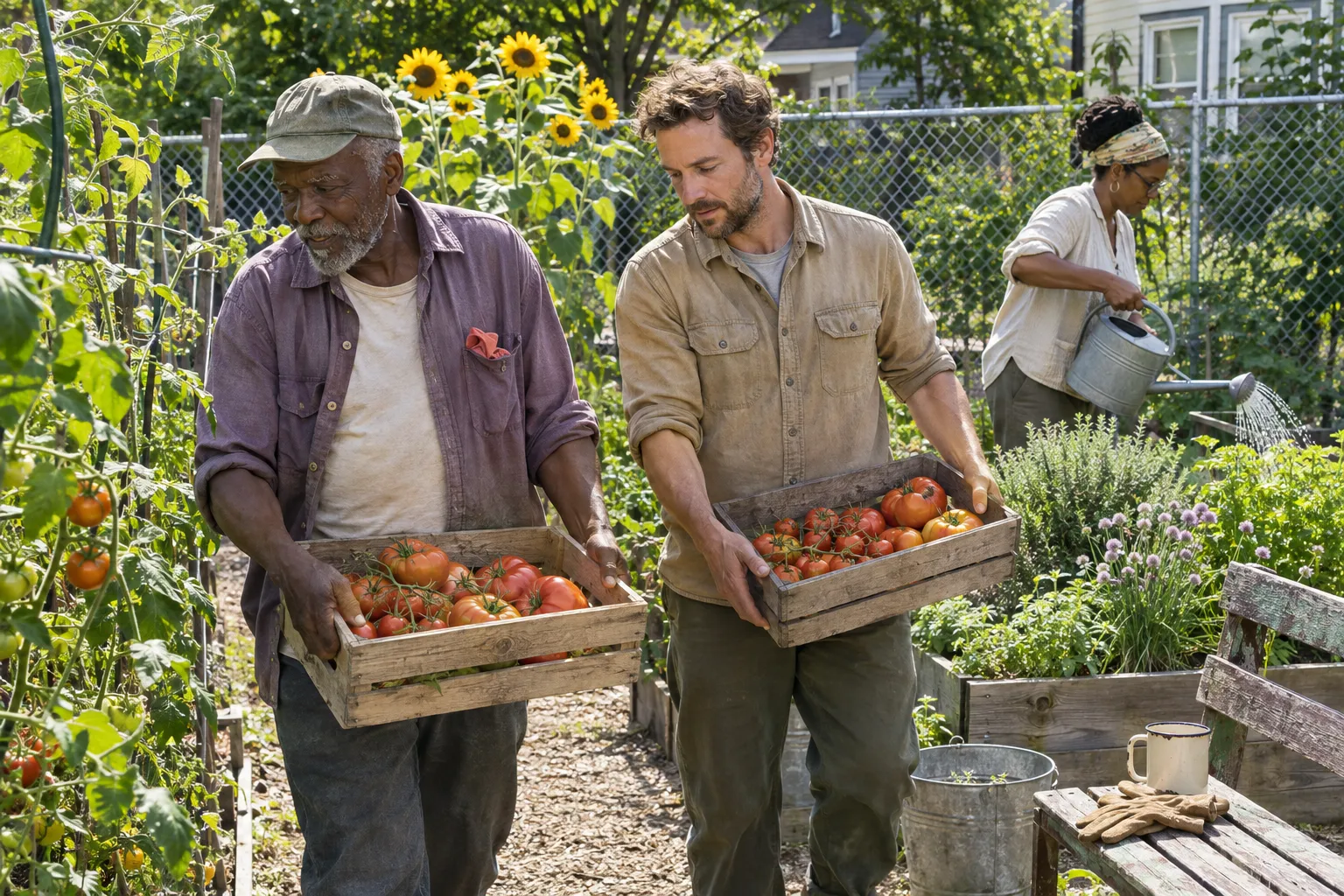
Chosen family means close, family-like relationships formed outside biological or legal ties. It can sit alongside relatives or serve as a main source of support, and the people in it may be friends, partners, ex-partners, neighbors, mentors, co-parents, or community members.
The roles are easier to share than they sound: rides, meals, a listening ear, a name on an emergency form. The U.S. rules about hospitals and inheritance are where people most often get surprised, so those are explained below with links to federal guidance. For the wider picture of identity and relationships, see LGBTQ+ relationships and family structures.
What chosen family can mean
Researchers describe chosen family as meaningful relationships built by choice rather than blood or law. A qualitative U.S. study of 11 queer and transgender adults found emotional support, shared meals, care during illness, help with medical systems, and mutual aid. Some people use chosen family alongside relatives; others rely on it as their main network.
The idea is especially important in LGBTQ+ communities, and it is not limited to them. SAGE, the national resource center on LGBT aging, describes chosen family as including LGBTQ+ people, immigrants, racial and ethnic minorities, intimate partners, close friends, and other loved ones who give social support and care. People whose important relationships institutions do not always recognize often build this kind of network.
Nobody has to fill every role. For relatives and caregiving that sit alongside chosen family, see family communication and changing family roles, and for friendship support, boundaries, and reciprocity, the friendships guide. A caring relationship does not require unlimited availability, and one person cannot be everything. A network with several people, each doing a defined part, tends to last longer than one person carrying it all.
Broad public-health guidance links social connection with better health and well-being, according to the CDC. Those findings describe an association. They do not show that any particular chosen-family relationship causes a health outcome, and relationship quality, consent, safety, and access to formal care still matter.
Seven kinds of support you can ask for
Support comes in different forms, and naming the form makes a request easier to say yes to. Studies of chosen family describe relational support, such as belonging and affirmation, along with material and structural support, such as housing, food, money, and help reaching services. A 2026 scoping review of studies about queer, trans, Black, Indigenous, and other people of color covers that range, though its studies came from several countries and do not give a U.S. rate.
- Emotional support: listening, encouragement, affirming who you are, companionship, grief support. Agree first on whether you want listening, advice, distraction, or practical help.
- Practical support: rides, meals, errands, childcare, pet care, moving help, accessibility assistance. Agree on the task, date, time, and a backup.
- Holiday and cultural support: shared meals, new traditions, transportation, private celebrations. Agree on which traditions matter, who is invited, and what stays private.
- Health emergency support: being an emergency contact, visiting, passing along approved updates, bringing necessities. Agree on what information may be shared and with whom.
- Caregiving: medication prompts, rides, home visits, appointment coordination, respite, personal care. Agree on what the person can safely do, for how long, and what needs paid or clinical help.
- Financial or housing support: a loan, a temporary stay, shared expenses, food, or help applying for services. Agree on whether it is a gift, a loan, a shared cost, or a short-term arrangement.
- Help with forms and services: understanding paperwork, finding services, speaking up with permission. Agree on what the helper may say or do and which decisions stay yours.
The person offering help sets the limit on what they can give, and the person receiving help decides what information is shared and which choices remain theirs.
Agree on the role step by step
A broad promise such as "I'll always be there" is warm, and it is hard to keep because nobody knows what it covers. A sequence turns it into a plan both people understand. The sequence works for a new friend and for someone you have known for decades.

Seven steps cover it, each with a sentence showing how it can sound.
- Name the need. "I need a ride home after surgery."
- Ask before assuming. "Would you be open to helping with that?" Ask whether the person has the capacity, and accept the answer.
- Define the role. Agree on the task, timing, how often, how you will stay in touch, who pays for what, what stays private, and what falls outside the role.
- Confirm consent and control. The person receiving help decides what information is shared and what choices remain theirs. The person helping can decline or change their offer.
- Create a backup. Name another person, a paid service, or an emergency route in case the plan falls through.
- Try a limited period. A two-week or one-event agreement is easier to understand than an open-ended promise.
- Review and revise. Check in at a set date, and again after a health change, a move, a job change, a new relationship, a new caregiving demand, a money change, or a disagreement.
If the arrangement stops working, you can reduce the role, renegotiate it, add outside support, or end that form of help. Repair, forgiveness, and continued contact are choices. They are not requirements of being chosen family.
For ordinary friction, pause before reacting, describe the specific action and its effect, say what you need, and invite a concrete change. The guide to requests, agreements, and boundaries goes deeper on that kind of conversation.
Words you can use for asking, offering, declining, and reviewing
Short, specific wording does most of the work. These examples are starting points; change them until they sound like you.
To ask: "Could you drive me to my appointment next Tuesday and wait with me afterward? I do not need you to speak for me. If you cannot, can you tell me by Friday so I can ask someone else?"
To ask for a hospital-related role: "Could you be my emergency contact for this appointment? The hospital may call you if I cannot answer. You would not be expected to make medical decisions unless we complete the proper paperwork."
To offer: "I can bring meals twice this week and help with one grocery trip. I cannot provide overnight care or lend money."
To decline: "I care about you, but I cannot take on this role. I can help you think through another option."
To review: "Is this arrangement still working for both of us? What should stay, change, or end?"
Each example names a task, a limit, or a way out. That is what lets the other person answer honestly. The same approach applies to friendships, and the guide to friendship boundaries around time, privacy, money, and support has more wording for those limits.
Telling voluntary help from pressure
Support is a voluntary contribution with a clear scope. An obligation is a duty that may be freely chosen, created by law, or imposed through pressure. A chosen-family relationship can include real commitments without requiring constant access, perfect reciprocity, or unlimited sacrifice.
A few contrasts make the difference concrete. "I can drive you on Tuesday" has a clear limit. "You must always be available" has none. In voluntary help, the person can decline without punishment, and privacy and decisions stay with the person receiving help. In pressure, a no brings threats, guilt, exposure, or the loss of something essential, the expectation keeps growing without agreement, and help is used to demand control, information, sex, money, or access.
Help given once does not create a permanent claim. Someone who says "I helped you, so you owe me access to your money and your personal information" is describing control, not support.
The arrangement should always be open to review. A relationship that treats one yes as permanent consent has stopped being an agreement. If someone uses support to control your housing, money, communication, movement, health care, or who knows your identity, treat it as a safety concern and use the private support options listed near the end of this page.
Hospital visits, health information, and decisions in the United States
State law, hospital policy, your documents, and your capacity can all change the result, so confirm the details with the hospital, your state health department, or a qualified local legal professional.
Visiting, receiving information, and making decisions are three different things. Medicare- and Medicaid-participating hospitals must explain a patient's right to choose visitors, including friends, domestic partners, and other people the patient designates, subject to clinical restrictions and the patient's consent, according to CMS.
HIPAA does not require a provider to share information with every family member or friend. Under HHS guidance for family members and friends, a provider may share information relevant to someone's involvement in care when the patient agrees, does not object, or the provider decides sharing is in the patient's best interest. The HHS HIPAA FAQ covers the same ground.
Decision-making usually needs a document. A health-care power of attorney or a similar document can make a chosen person your personal representative, and state law affects how that designation works, according to HHS on personal representatives. Without an advance directive or another valid designation, default rules set by your state may give priority to relatives. The person closest to you emotionally is not automatically the decision-maker.
An emergency contact is a person an institution may call. The title alone does not create medical or financial authority. Practical steps people take include completing a state health-care proxy or advance directive, naming emergency contacts, giving approved people copies of the documents, and asking the hospital how it records support people and decision-makers.
Money, housing, and inheritance
A close relationship does not by itself decide who must provide care, pay expenses, manage property, or make decisions. A family label settles none of that, so put important commitments in writing. Agree on whether money is a gift, a loan, or a shared cost, and what happens if circumstances change.
Inheritance works the same way. A chosen family member usually does not inherit automatically because the relationship is close. Without a valid plan, state intestacy rules decide who receives property, as the American Bar Association explains. Wills, trusts, beneficiary designations, joint ownership, and powers of attorney each do a different job, and they need to fit together. The ABA Young Lawyers Division notes that unmarried partners and blended families in particular benefit from coordinating these documents and updating them after life changes.
If you want a chosen family member to inherit, to hold decision-making power, or to share a home or finances, ask a qualified local professional which documents your state requires.
Age, disability, distance, money, and culture
The same role can look very different depending on age, disability, income, language, transportation, immigration concerns, distance, work schedules, and access to technology. A few questions help match a role to a real life.
- What name and relationship language feels right to each person?
- What language and communication method work best?
- What accessibility support is needed?
- What can this person offer without risking their housing, health, job, immigration privacy, or financial stability?
- What information may be shared, with whom, and in what setting?
- Is there a paid, public, community, or professional option that should add to personal support?
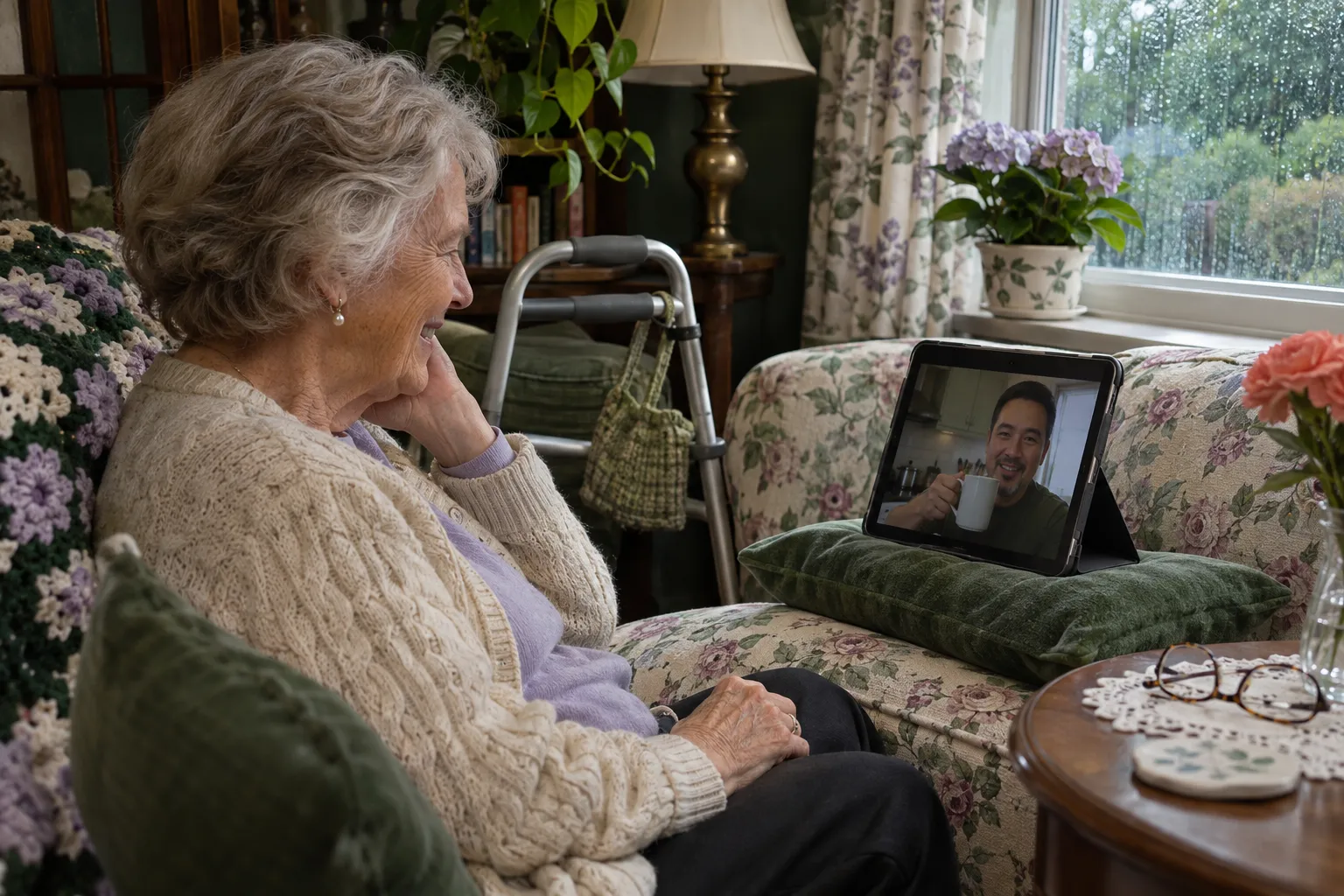
For older adults, chosen family often includes friends, neighbors, former partners, and community members. Research on LGBTQ+ older adults notes that these relationships can provide care, security, and belonging, and that same-age networks can be stretched when several people face illness, disability, distance, or reduced mobility at once. A theoretical review of older adult networks points the same way, so it helps to ask who matters, who can help, and how future care needs will be covered.
Distance changes the form of help, not the value of it. A friend across the country can handle phone calls, research, forms, or a regular video check-in, while someone nearby covers rides and meals. The guide to setting communication expectations at a distance applies here too.
When confidential medical or legal matters need interpretation, arrange it safely and appropriately rather than assuming one relative or friend should do it. Chosen-family support does not replace clinical, legal, emergency, or paid care when those are needed. For families that blend traditions, cultural relationships covers shared celebrations and different expectations of family duty.
When a joint conversation is not a safe fit
A direct talk, group meeting, mediation, or joint agreement may be unsafe when there is abuse, coercive control, stalking, retaliation, financial abuse, sexual violence, unsafe monitoring, exploitation, or another serious imbalance of power. The National Domestic Violence Hotline describes relationship abuse as a pattern used to gain or keep power and control, and it includes physical, sexual, emotional, financial, and technology-based abuse.
In those situations, nobody has to confront, disclose, forgive, mediate, attend family counseling, or sign a group agreement. Private support comes first, from a trusted person or a trained advocate. If someone may monitor your phone, computer, accounts, or location, use a safer device, and plan before you change passwords, remove trackers, end contact, or report behavior. The NNEDV Safety Net Project explains how. Do not reveal another person's location, identity, immigration status, sexual orientation, gender identity, or safety plan without their permission unless emergency action is necessary.
Each organization's own page lists its current hours and contact options, and those can change, so confirm them before you rely on a number or text code:
- Call 911 for immediate physical danger.
- Call or text 988, or use chat, for free, confidential crisis support through the 988 Suicide & Crisis Lifeline. Spanish-language services are listed there.
- The National Domestic Violence Hotline: call 1-800-799-SAFE (7233), text START to 88788, or use live chat. Spanish-language services are available.
- RAINN for sexual violence: call 1-800-656-HOPE (4673) or text HOPE to 64673. English and Spanish are listed.
- Trans Lifeline, peer support for trans and questioning people, at 1-877-565-8860. Hours are on weekdays, and Spanish is option 2.
- The Trevor Project for LGBTQ+ young people: call 1-866-488-7386, text START to 678-678, or use online chat.
- For stalking, the Department of Justice Office on Violence Against Women advises calling 911 for immediate danger and lists VictimConnect at 1-855-4-VICTIM (1-855-484-2846). Stalking laws vary by state.
Questions people ask
Is chosen family only for LGBTQ+ people?
No. The term is closely tied to LGBTQ+ communities, and it also describes other kinds of intentional kinship and mutual support, including among immigrants, racial and ethnic minority communities, and others whose close relationships institutions do not always recognize.
Does chosen family mean unlimited responsibility?
No. Support can be meaningful and committed while staying voluntary, specific, and open to review. A person can say what they can offer, decline what they cannot, and still be part of someone's family.
Can a chosen family member be my emergency contact?
Yes, if the person agrees and the institution accepts the designation. Being an emergency contact does not by itself create authority to make medical decisions, so ask the hospital or clinic how it records contacts and decision-makers.
Can chosen family make medical decisions for me?
A person may need to be named in a health-care power of attorney or another document your state recognizes. State rules and form requirements vary, so check with your state health department or a qualified local professional.
Can chosen family inherit from me?
Do not assume so. State intestacy law, wills, trusts, beneficiary designations, and ownership records decide who receives property. A qualified local professional can tell you which documents fit your situation.
How do I ask for help without putting pressure on anyone?
Name the task, the timing, the limits, any privacy needs, and a backup plan, and ask whether the person has the capacity. Make clear that a no is fine, and invite them to tell you by a set date so you can ask someone else.